

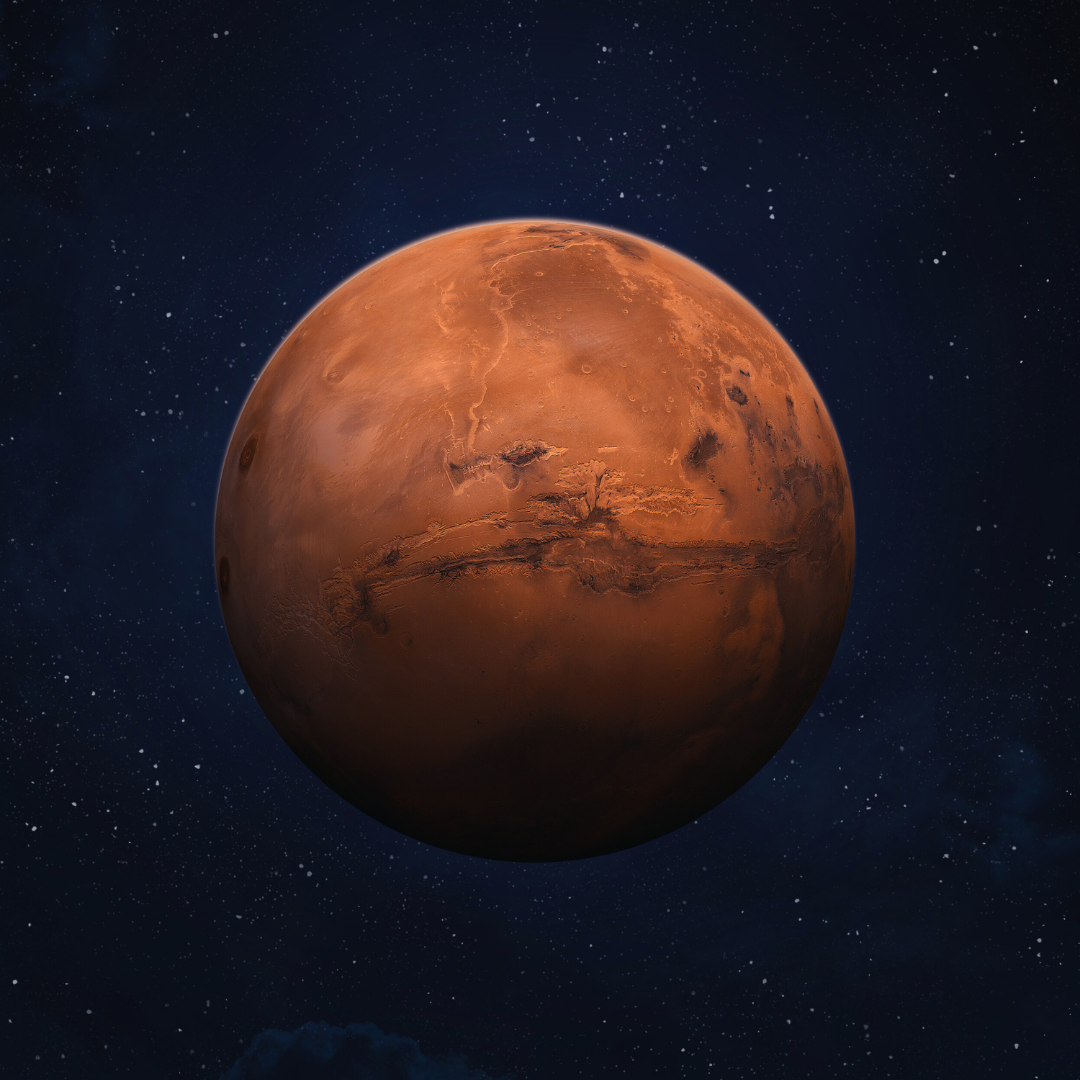




Mars exploration offers practical advancements in technology and science that could directly influence life on Earth and beyond. By studying Mars, scientists can better understand planetary evolution, climate systems, and potential habitability.
It also drives innovation in areas such as sustainable energy, robotics, and life support systems, which are essential for long-term human survival in space. These developments have the potential to improve everyday technologies and address challenges like resource scarcity.
Moreover, Mars exploration provides insight into the possibility of human settlement beyond Earth. This expands humanity’s options for survival in the event of global crises, shaping the future of space travel and habitation.
The Strategic Importance of Mars Exploration
Mars exploration has implications beyond scientific curiosity, touching on humanity’s long-term survival, geopolitical dynamics, and technological advancements. Its pursuit involves careful balancing of risks and opportunities, shaping policies and priorities worldwide.
Becoming a Multi-Planetary Species
Mars represents the most viable option for establishing a permanent human presence beyond Earth. Its similarities to Earth, such as day length and polar ice, provide practical foundations for colonisation efforts.
Expanding to Mars can reduce the existential risk posed by global catastrophes on Earth, such as nuclear conflict or climate disasters. This diversification of habitats acts as a survival strategy for human civilisation.
Long-term habitation on Mars demands innovations in life support, agriculture, and infrastructure, which could improve sustainability techniques that also benefit Earth. The Red Planet mission thus serves as a testbed for future space settlements.
International Competition and Collaboration
Mars exploration is a field of intense international interest, with agencies like NASA, ESA, Roscosmos, CNSA, and private companies investing heavily. This creates both rivalry and cooperative opportunities.
Competition drives rapid technological advances and resource allocation, impacting national security and prestige. Meanwhile, collaboration on shared projects like the Mars Sample Return fosters diplomatic ties and shared scientific knowledge.
Multinational partnerships help distribute costs and risks while combining expertise. Agreements on Mars governance and resource usage will set precedents for future space law, affecting global space policies.
The Role of Robotic Missions
Robotic missions are foundational to Mars exploration, providing critical data on surface conditions, climate, and geology. Rovers such as Perseverance and orbiters like MAVEN map the Red Planet’s environment.
They reduce human risk by scouting safe landing sites and testing technology remotely. Robotics also perform science tasks impossible for humans presently, like deep drilling and long-duration monitoring.
Continuous robotic exploration informs human missions, guiding effective planning. These missions collect samples, evaluate potential resources, and help understand Mars’ history, crucial for deciding where and how humans should settle.
Scientific Discoveries and the Search for Life
Mars has been a focal point for understanding the potential for life beyond Earth. Research efforts explore its environment, the presence of water, geological history, and direct sample analysis to reveal clues about past or present life forms.
Investigating the Potential for Life on Mars
Scientists examine Mars for signs of past or present life by analysing its surface and atmosphere. The discovery of organic molecules by the Curiosity rover suggests Mars once had the building blocks necessary for life.
Extremophiles on Earth guide hypotheses about life adapting to harsh conditions. Mars’ subsurface may still support microbial life due to protection from radiation and temperature swings.
Experiments aim to detect biosignatures such as methane fluctuations, which can be linked to biological activity. Space missions continue to assess these signals with improving technology.
Past and Present Water on Mars
Water is crucial to life, and Mars shows clear evidence of both past and present water. Ancient riverbeds, lake basins, and hydrated minerals confirm that liquid water once existed on the surface.
Currently, water mostly exists as ice caps at the poles and in underground reservoirs. Recent studies suggest intermittent brines may form on the surface under specific conditions.
Understanding water distribution helps define habitable zones on Mars and guides mission landing sites for life-detection instruments.
Understanding Mars’ Climate and Geology
Mars’ climate history reveals transitions from a warmer, wetter environment to the cold, arid planet seen today. Its thin atmosphere and magnetic field loss led to reduced protection from solar wind and gradual water loss.
Geological data collected by rovers like Curiosity show layered sedimentary rocks, volcanic activity, and impact craters. These features preserve records of Mars’ environmental changes.
Knowledge of Mars’ geology informs scientists about potential habitats and planetary processes affecting habitability over time.
Mars Sample Return Missions
Mars Sample Return missions represent a critical step towards definitive analysis of Martian material on Earth. They aim to retrieve soil and rock samples collected by rovers like Curiosity and Perseverance.
Returning these samples allows a detailed laboratory study using advanced techniques unavailable on Mars. This could confirm evidence of life or refine understanding of Mars’ history.
The mission involves complex technology and international collaboration, ensuring contamination control and safe transport of Martian specimens back to Earth.
Pioneering Technologies and Future Human Missions
Mars exploration has driven crucial advancements in sustainable living, habitat development, and new technologies. These innovations aim not only to support humans on Mars but also to provide valuable insights for Earth’s environmental challenges.
In-Situ Resource Utilisation for Sustainability
In-situ resource utilisation (ISRU) focuses on using Martian materials to reduce reliance on supplies from Earth. The technology targets extracting water from Martian soil and ice, which can be split into oxygen and hydrogen for breathable air and rocket fuel.
ISRU also involves producing building materials from regolith to construct habitats. This reduces payload weight and cost for missions. NASA’s Mars rovers, like Curiosity, have helped identify regions with accessible water ice, informing ISRU strategies.
Sustainability through ISRU will be essential for prolonged Mars missions and future colonisation.
Preparing for Human Settlement on Mars
Building a human settlement on Mars requires overcoming harsh climate conditions and limited resources. Technologies must ensure stable habitats capable of shielding residents from radiation and extreme temperatures.
Missions utilise data from the MAVEN orbiter to understand Mars’ atmosphere and solar wind effects, which influence habitat design. Life support systems rely heavily on recycling water and oxygen, combined with ISRU outputs.
Plans include inflatable and 3D-printed modules made from Martian materials for efficient and rapid construction. Psychological and physiological support for inhabitants is also a focus of ongoing research.
Technological Innovations from Mars Missions
Robotic missions have driven innovations in mobility, autonomous systems, and remote scientific analysis. The Curiosity rover’s advanced instruments have developed new sensors and AI for navigation and data collection.
Communication improvements allow real-time remote control from Earth despite long delays. These technologies advance robotics not only for space but also for Earth applications, including disaster response and environmental monitoring.
Mars missions also contribute to climate change studies by providing comparative data on atmospheric evolution and solar interactions affecting planetary climates.
Societal and Global Implications
Mars exploration presents challenges and opportunities that extend beyond science. Its impacts reach into climate action, innovation, and the ethical and economic frameworks of society.
Addressing Climate Change Lessons
Studying Mars’ climate history helps scientists understand planetary warming and atmospheric loss. Mars lost much of its atmosphere over billions of years, providing a case study on the effects of greenhouse gas decline and solar wind stripping.
These insights inform Earth’s climate models, especially regarding atmospheric protection and sustainability. Technologies developed for Mars’ extreme environments also have applications in addressing climate change on Earth, such as improved water recycling and energy efficiency systems.
Mars missions highlight the fragility of planetary environments and the urgency of responsible stewardship of Earth’s own climate.
Inspiring Scientific and Technological Progress
Mars exploration drives innovation in robotics, materials science, and propulsion technologies. These advances often transfer directly to Earth-based industries, improving medicine, agriculture, and transportation.
The challenge of sustaining life on Mars encourages new research in closed-loop life support systems and renewable energy sources. It fosters global collaboration among agencies and private companies, boosting knowledge-sharing and economic growth.
Such progress enables breakthroughs with practical applications, strengthening technology infrastructure worldwide and pushing the boundaries of human capability.
Ethical and Economic Considerations
Mars colonisation raises ethical questions about planetary protection and humanity’s right to alter another world. International space treaties guide responsible behaviour, but debates persist on resource utilisation and environmental impact.
Economically, Mars missions require substantial investment but may open new markets in space tourism, mining, and research. These activities could reshape global economies, but also risk increasing inequality if access remains limited to wealthy nations or corporations.
Balancing exploration with sustainable policies will be crucial to managing Mars’ development responsibly and equitably.


