

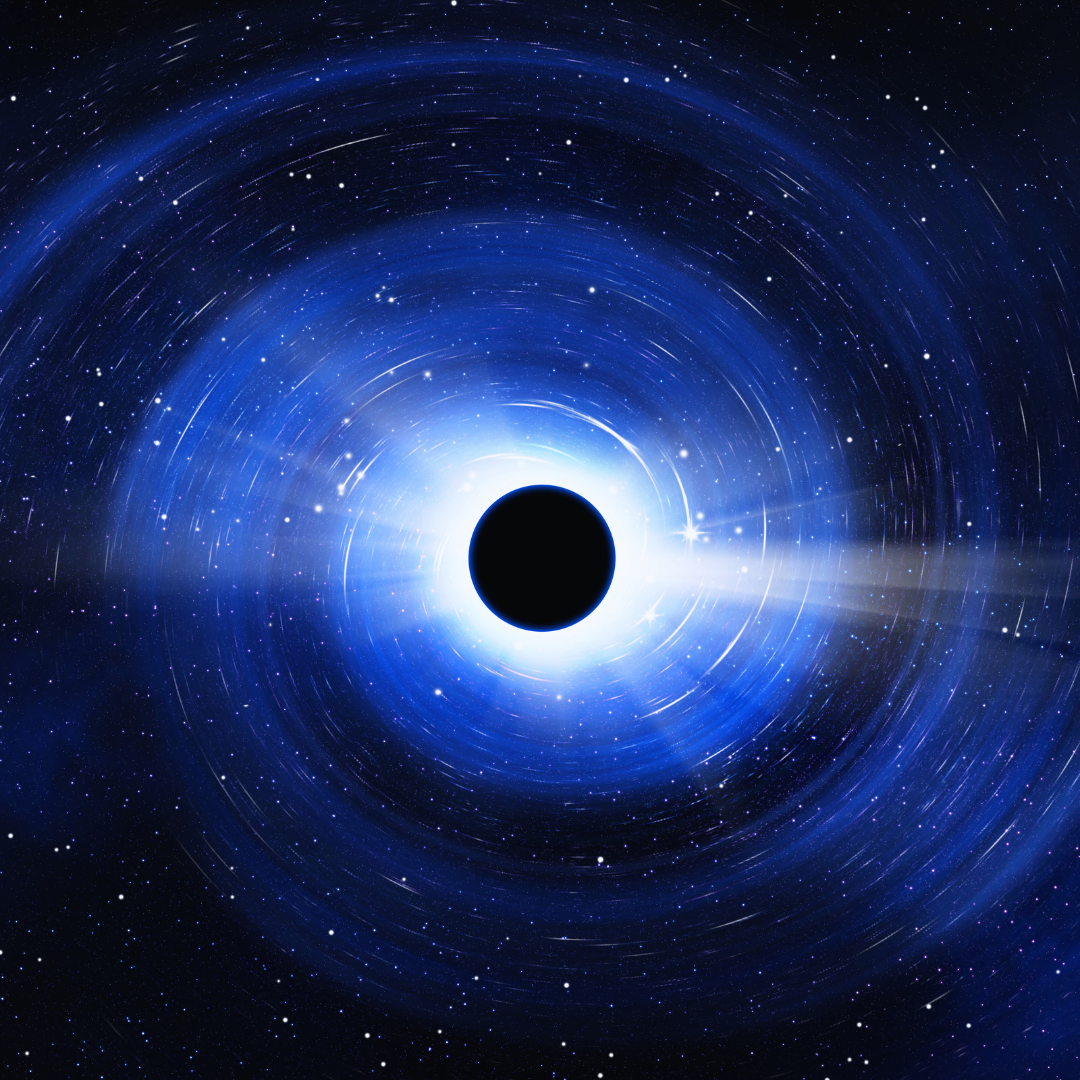




Black holes challenge the fundamental laws that govern the universe. They create conditions where gravity becomes so intense that traditional physics, including general relativity and quantum mechanics, no longer fully applies. The bending of space and time near black holes reveals gaps in current scientific understanding, showing that black holes bend the rules of physics by pushing them to their limits.
This extreme environment forces scientists to rethink how matter, energy, and information behave under such conditions. It sparks ongoing research aimed at unifying competing theories to describe what really happens inside and around black holes. Through this, black holes become natural laboratories for exploring the unknown aspects of physical laws.
The Unusual Nature of Black Holes
Black holes challenge conventional physics with their extreme properties. They contain singularities where density becomes infinite, have event horizons marking a point of no return, and possess accretion disks that emit detectable radiation from infalling matter.
Singularities and Infinite Density
At the core of a black hole lies the singularity, a point where matter is crushed to infinite density. This means all the mass of the black hole is concentrated into an area of zero volume. Physics, as currently understood, breaks down here, as gravitational forces become infinitely strong.
Singularities are hidden from outside observation by the event horizon, preventing direct study. The concept of infinite density defies the known laws of matter and spacetime, which prompts ongoing theoretical exploration in quantum gravity to explain these phenomena.
The Boundary of the Event Horizon
The event horizon acts as the black hole’s boundary. It is defined by the Schwarzschild radius, the critical radius where the escape velocity exceeds the speed of light. Nothing, not even light, can cross this limit outward.
Information and matter passing this threshold are effectively lost to the outside universe. The event horizon also signifies the point beyond which conventional physics no longer applies in the same way, as spacetime curvature becomes extreme.
The Accretion Disk and Observable Features
Surrounding many black holes is an accretion disk, formed from gas and dust spiralling inward. Friction and gravitational forces heat this material, causing it to emit strong X-rays and other radiation detectable by telescopes.
The accretion disk provides observable evidence of a black hole’s presence. Its bright emissions contrast sharply with the black hole itself, which remains invisible. This radiation helps scientists estimate black hole mass and spin, key parameters for understanding their nature.
How Black Holes Challenge the Laws of Physics
Black holes create extreme conditions where established laws of physics face significant challenges. They warp spacetime with intense gravity, revealing limits in current theories like general relativity and quantum mechanics. Complex issues such as the information paradox highlight the tension between these frameworks.
Curved Spacetime and Gravity
Black holes are regions where gravity is so strong that spacetime curves drastically, as described by Einstein’s general relativity. This curvature affects everything nearby, including light, which bends or cannot escape beyond the event horizon.
The gravitational field near a black hole warps spacetime unevenly, creating a singularity at its centre where density becomes infinite. Here, traditional physics breaks down, as known laws can’t fully describe this extreme environment.
Such curvature exemplifies gravity’s role not as a force but as a geometric property of spacetime. This concept revolutionised physics but also presented unresolved issues when applied to black holes.
Breaking Points of Current Theories
General relativity explains macroscopic gravity well but fails at quantum scales, especially near a black hole’s singularity. Quantum mechanics governs small particles and their behaviours, but doesn’t incorporate gravity effectively.
This mismatch creates a gap: singularities represent “breaking points” where neither theory alone can predict outcomes accurately. Physicists search for a unified theory, often called quantum gravity, to resolve these contradictions.
Black holes expose this fracture by forcing physicists to address phenomena that defy either classical or quantum description. Their existence demands new or modified laws to reconcile these frameworks.
The Black Hole Information Paradox
The information paradox arises from the question of whether information that falls into a black hole is lost forever. According to quantum mechanics, information cannot be destroyed, but classical black holes imply permanent loss beyond the event horizon.
Stephen Hawking proposed that black holes emit radiation, now called Hawking radiation, leading to gradual evaporation. This suggests information might be irretrievably lost, contradicting quantum laws and causing a paradox.
Resolving this paradox is crucial to understanding how information and quantum states behave in extreme gravity. Different theories suggest information may escape or be preserved in some form, but consensus remains elusive.
Where General Relativity Meets Quantum Mechanics
The boundary where gravity’s geometric description meets quantum uncertainty is most evident around black holes. At the event horizon and singularity, quantum effects and gravitational curvature intersect, creating challenges for both fields.
A key difficulty is uniting these theories into a single consistent framework. Attempts like string theory and loop quantum gravity aim to describe spacetime and matter at all scales, including black holes.
Studying black holes thus acts as a testing ground for theories of quantum gravity. This effort seeks to predict phenomena where the laws of physics currently fail or conflict.
Formation and Evolution of Black Holes
Black holes form and evolve through specific processes involving the final stages of stellar evolution, as well as interactions with their surroundings. These processes include the collapse of massive stars, the role of white dwarfs and neutron stars, and subsequent growth by accretion or mergers.
Collapse of Massive Stars
Black holes typically form when stars with initial masses greater than about 20 times that of the Sun exhaust their nuclear fuel. Without this fuel, pressure to counteract gravity disappears, causing the star’s core to collapse.
This collapse is rapid and leads to the formation of a stellar-mass black hole. The infalling material compacts into an extremely dense region where gravity prevents even light from escaping.
During this process, a supernova explosion often occurs, expelling the outer layers of the star. The remnant core continues collapsing until a black hole or neutron star remains.
White Dwarfs and Neutron Stars
Stars with lower initial masses end their life cycles differently. White dwarfs form when stars less than about 8 solar masses lose fuel and shed outer layers, leaving behind a dense core usually unable to collapse into a black hole.
Neutron stars emerge when stars between 8 and 20 solar masses collapse, but the core’s density is halted by neutron degeneracy pressure. This makes neutron stars incredibly dense, but distinct from black holes.
If a neutron star gains enough mass, potentially from a binary companion, it may collapse further into a black hole. This boundary depends on the Tolman–Oppenheimer–Volkoff limit, approximately 2–3 solar masses.
Growth via Accretion and Mergers
Once formed, black holes can grow by pulling in surrounding matter, a process called accretion. Gas, dust, and stellar remnants falling into a black hole add to its mass and can emit high-energy radiation.
Black holes also increase in size by merging with other black holes. These mergers produce gravitational waves, which can now be detected by instruments like LIGO and Virgo, confirming predictions of general relativity.
Both accretion and mergers contribute to the formation of supermassive black holes observed in the centres of galaxies, far larger than their stellar-mass counterparts formed directly from star collapse.
Cultural Impact and The Future of Black Hole Science
Black holes have influenced culture through imaginative storytelling and groundbreaking scientific theories. Their mystery drives both creative exploration and rigorous research, pushing the boundaries of what is known about the universe and physics.
Black Holes in Science Fiction
Black holes appear frequently in science fiction as symbols of mystery and danger. Writers use them as plot devices for time travel, alternate dimensions, or as gateways to unknown universes.
Fictional works such as Interstellar have popularised some scientific concepts like gravitational time dilation, bringing black holes into mainstream awareness. These portrayals often blend established physics with speculative ideas to explore human responses to the unknown.
While sometimes scientifically inaccurate, science fiction encourages public interest and inspires researchers. It presents black holes not just as cosmic phenomena but cultural icons with deep symbolic meaning.
Hawking’s Ideas and Modern Research
Stephen Hawking revolutionised black hole research by proposing that black holes emit radiation, now called Hawking radiation. This challenged the notion that nothing could escape black holes and linked quantum mechanics with gravity.
Hawking’s theory suggested black holes could slowly evaporate, impacting ideas about information loss and quantum theory. Current research builds on this, studying the connections between gravity, thermodynamics, and quantum mechanics.
Modern work uses advanced telescopes and mathematical models to test Hawking’s predictions. Scientists seek a unified theory explaining black holes’ behaviour at both cosmic and quantum scales, addressing fundamental questions about the nature of reality.
The Ongoing Search for Answers
Black holes remain a focus of active scientific investigation due to unanswered questions about their interiors and effects on spacetime. Projects like the Event Horizon Telescope have produced the first images of black hole shadows, confirming predictions of general relativity.
Researchers also search for links between black holes and dark matter or the origins of the universe. Gravitational wave detectors catch signals from black hole mergers, offering insights into their mass and spin properties.
The future of black hole science will involve both observational breakthroughs and theoretical advances, striving to clarify how these objects challenge established physical laws and what they reveal about the cosmos.


