

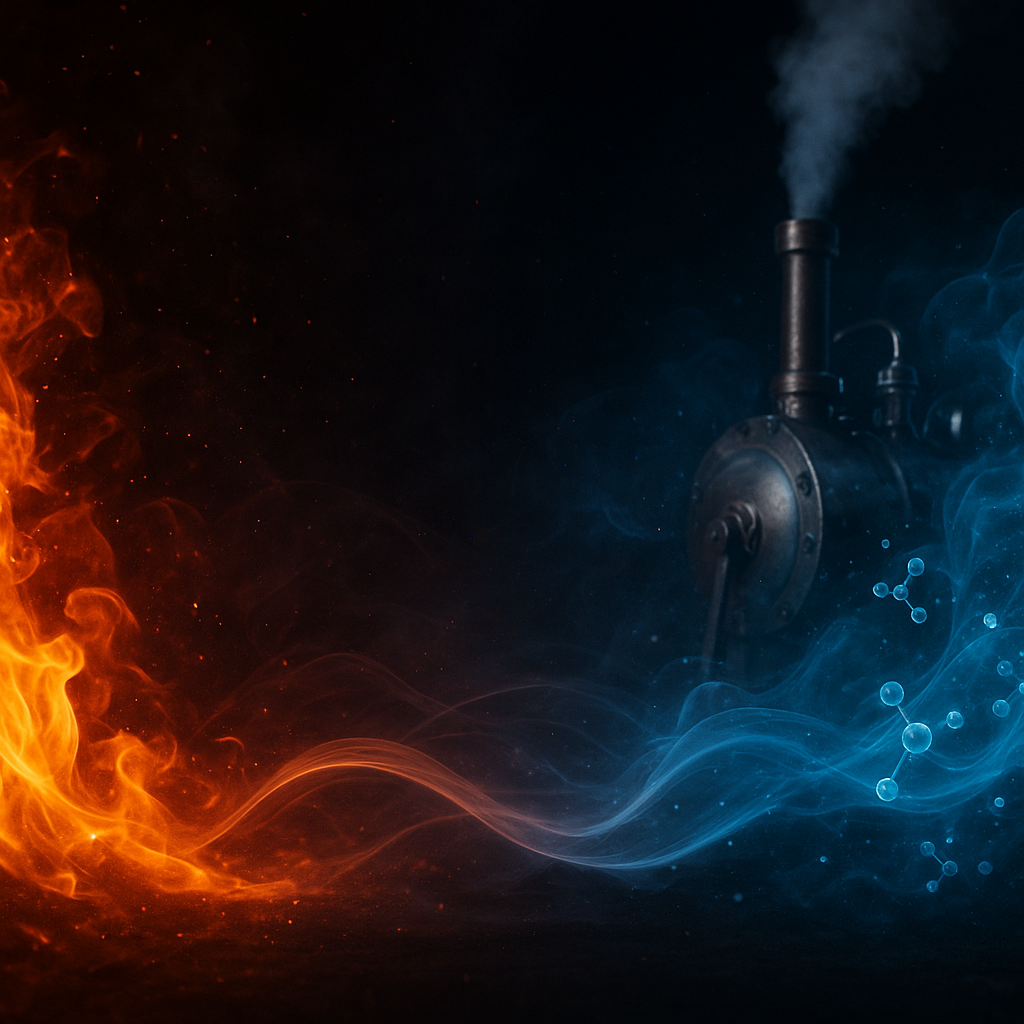



Thermodynamics is one of those subjects that sounds intimidating at first — full of Greek letters, abstract concepts, and equations that seem designed to confuse. But strip it back to its foundations, and you’ll find a set of principles so elegantly logical that they govern everything from the engine in your car to the formation of stars billions of light-years away. Understanding thermodynamics isn’t just for physicists or engineers; it’s a window into how the universe actually works.
At its core, thermodynamics is the study of energy — how it moves, transforms, and ultimately disperses. The four fundamental laws of thermodynamics form the backbone of this science, and each one tells us something profound about the nature of reality. Whether you’re a student encountering these ideas for the first time or someone looking to refresh their understanding, this guide breaks it all down clearly and honestly.
What Is Thermodynamics, Exactly?
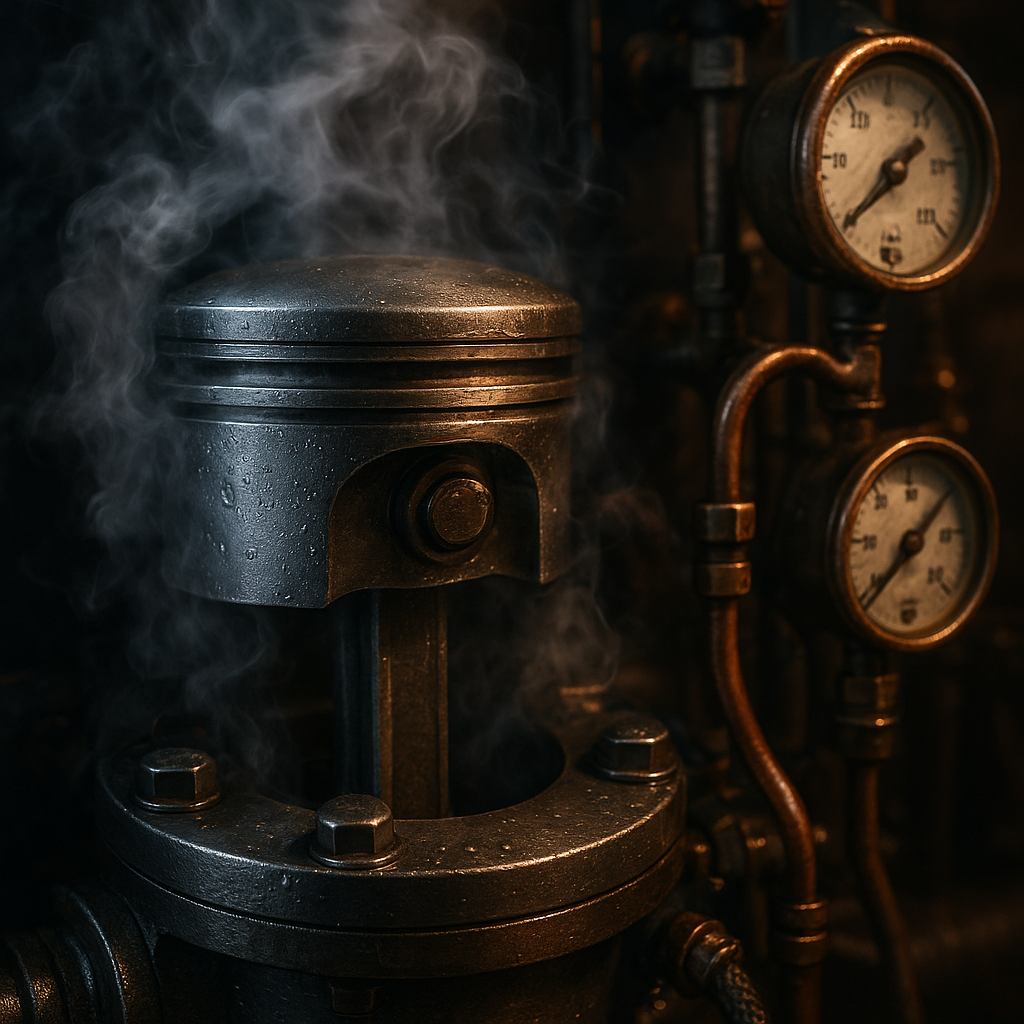
The word itself comes from the Greek therme (heat) and dynamis (power). Thermodynamics emerged as a formal science in the 19th century, largely driven by the practical need to understand and improve steam engines during the Industrial Revolution. Engineers and scientists like Sadi Carnot, James Joule, and Lord Kelvin pieced together a framework that turned out to be universal in scope.
Thermodynamics deals with systems — defined regions of space or matter — and how they exchange energy with their surroundings. A system might be a gas inside a cylinder, a living cell, or even the entire universe. The energy exchanges it studies include heat transfer and mechanical work, and the laws governing these exchanges apply without exception in the known physical world.
There are four laws of thermodynamics: the Zeroth, First, Second, and Third. Each one adds a layer of understanding, and together they form one of the most complete and experimentally validated frameworks in all of science.
The Zeroth Law: The Unspoken Foundation
The Zeroth Law might seem like an afterthought — it was actually formalised after the First and Second Laws, which is why it has such an odd name. But conceptually, it underpins everything that comes after it.
The Zeroth Law states: if two systems are each in thermal equilibrium with a third system, then they are in thermal equilibrium with each other. In simpler terms, if object A is the same temperature as object C, and object B is also the same temperature as object C, then A and B must be the same temperature as each other.
This might sound almost too obvious to bother stating, but it’s actually the logical basis for the very concept of temperature itself. Without the Zeroth Law, the idea that we can assign a single number — a temperature — to describe a system’s thermal state wouldn’t hold up mathematically. It’s the foundation that makes thermometers meaningful and temperature a consistent, transitive property.
The First Law: Energy Cannot Be Created or Destroyed
The First Law of Thermodynamics is perhaps the most famous: energy is conserved. More precisely, the total energy of an isolated system remains constant. Energy can change forms — from kinetic to thermal, from chemical to mechanical — but it cannot simply appear from nothing or vanish into nothing.
Mathematically, this is often expressed as:
ΔU = Q − W
Where ΔU is the change in internal energy of a system, Q is the heat added to the system, and W is the work done by the system. It’s an elegant equation, but its implications are enormous.
Real-World Applications of the First Law
The First Law explains why perpetual motion machines of the first kind — devices that produce unlimited energy from nothing — are physically impossible. Every engine, every power station, every metabolic process in your body must draw on an existing energy source. Nothing is free.
- Internal combustion engines: Chemical energy stored in fuel converts to heat and mechanical work. The total energy budget must always balance.
- Human metabolism: The calories in food represent chemical energy. Your body converts this to heat, movement, and the work of keeping your organs running.
- Electrical power generation: Whether from burning coal or splitting uranium, energy is transformed — never created from scratch.
The First Law is also why diets work the way they do. The human body, as a thermodynamic system, must obey energy conservation. Consume more energy than you expend, and the surplus is stored. There’s no getting around it.
The Second Law: Entropy Always Increases
If the First Law is the most famous, the Second Law is arguably the most profound — and the most misunderstood. The Second Law introduces the concept of entropy, a measure of disorder or the number of possible arrangements a system can take. The law states that in any spontaneous process, the total entropy of an isolated system will increase over time, or at best remain constant.
Put more bluntly: things tend to fall apart. Heat flows naturally from hot objects to cold ones, never the reverse. A dropped glass shatters into pieces; shattered pieces don’t spontaneously reassemble into a glass. Smoke disperses into a room; it doesn’t gather itself back into a neat plume. These are all expressions of entropy in action.
Why Entropy Matters So Much
Entropy gives thermodynamics its arrow of time. The laws of physics at the microscopic level are largely time-symmetric — run the equations backward and they still hold. But entropy breaks this symmetry. Because entropy increases, we can distinguish the past from the future. The direction of time, at least as we experience it, is the direction of increasing entropy.
The Second Law also tells us something crucial about efficiency. No heat engine can convert all its input heat into useful work. Some energy will always be lost to the environment as low-grade heat. This is not a flaw in engineering — it’s a fundamental constraint of physics. The theoretical maximum efficiency of a heat engine operating between two temperatures was worked out by Sadi Carnot in 1824, giving us the concept of the Carnot efficiency.
Common Misconceptions About Entropy
One frequent misunderstanding is that the Second Law somehow contradicts biological evolution or the existence of complex structures like living organisms. It doesn’t. The Second Law applies to isolated systems. The Earth is not isolated — it constantly receives energy from the Sun. Living systems can increase their local order by exporting even greater disorder to their surroundings, fully consistent with the Second Law. Overall entropy in the universe still increases.
The Third Law: Approaching Absolute Zero
The Third Law of Thermodynamics states that as the temperature of a system approaches absolute zero (−273.15°C, or 0 Kelvin), the entropy of a perfect crystal approaches zero.
Absolute zero is the lowest theoretically possible temperature — a state where particles have minimal thermal motion. The Third Law tells us two important things. First, that there is a true zero point for entropy in a perfectly ordered system. Second, and more practically, that absolute zero is a limit that can be approached but never actually reached.

What Happens Near Absolute Zero?
At temperatures close to absolute zero, matter behaves in extraordinary ways. Some materials become superconductors, conducting electricity with zero resistance. Others form superfluids, flowing without viscosity and even climbing the walls of containers. These phenomena, known collectively as quantum effects, become dominant when thermal energy is so low that quantum mechanical behaviour is no longer masked by heat-driven randomness.
Scientists have achieved temperatures within billionths of a degree of absolute zero in laboratory settings, but the Third Law ensures that zero itself remains forever out of reach. Each step toward absolute zero requires removing more and more energy from a system that has progressively less to give — a process with diminishing returns that never quite completes.
How the Four Laws Work Together
The four laws of thermodynamics aren’t isolated statements — they’re an interlocking framework. The Zeroth Law gives us temperature as a meaningful quantity. The First Law tells us that energy is conserved. The Second Law explains the direction of natural processes and introduces the concept of entropy. The Third Law anchors the entropy scale at absolute zero and tells us something fundamental about the limits of physical cooling.
Together, they explain why your coffee goes cold, why power stations can’t achieve 100% efficiency, why the universe is heading toward a state of maximum entropy sometimes called the heat death, and why life itself is possible despite — or even because of — these constraints.
Thermodynamics in Everyday Life
It’s worth pausing to appreciate just how pervasive these principles are:
- Refrigerators and air conditioners work by exploiting thermodynamic cycles to move heat against its natural flow — from cold to hot — using external work (electrical energy).
- Weather systems are driven by thermodynamic processes: differences in temperature and pressure drive wind, evaporation, and precipitation.
- Stars shine because nuclear fusion releases energy, but they are also subject to thermodynamic limits — eventually, the fuel runs out and entropy wins.
- Chemical reactions are governed by thermodynamic principles. Whether a reaction occurs spontaneously depends on both energy (enthalpy) and entropy considerations, combined in the concept of Gibbs free energy.
Entropy and Information: A Modern Perspective
One of the most fascinating developments in modern science is the connection between thermodynamic entropy and information theory. Claude Shannon, developing communication theory in the 20th century, found that his mathematical measure of information uncertainty was formally identical to Boltzmann’s entropy equation. This wasn’t a coincidence.
The connection runs deep: information has a physical cost. Erasing a single bit of information necessarily generates heat — a result known as Landauer’s principle. This means that computation itself is bounded by thermodynamics. As computers become ever more powerful and efficient, they are ultimately constrained by the same laws that govern steam engines and stars.
Conclusion
The four laws of thermodynamics represent one of science’s great achievements: a concise, universal framework that describes the behaviour of energy in all its forms. From the Zeroth Law’s grounding of temperature as a concept, through the First Law’s assertion of energy conservation, to the Second Law’s inevitable march of entropy, and finally the Third Law’s unreachable limit of absolute zero — these principles have proven robust across centuries of experiment and application.
Understanding these laws isn’t just academically satisfying. They explain the physical limits of technology, the direction of time, the eventual fate of the universe, and even why your morning cup of tea goes cold. Thermodynamics is not a relic of 19th-century science — it remains as vital and relevant as ever, shaping everything from the design of modern power plants to the theoretical limits of computing. The universe runs on thermodynamics, and now you understand a little more about the rules it’s playing by.


