

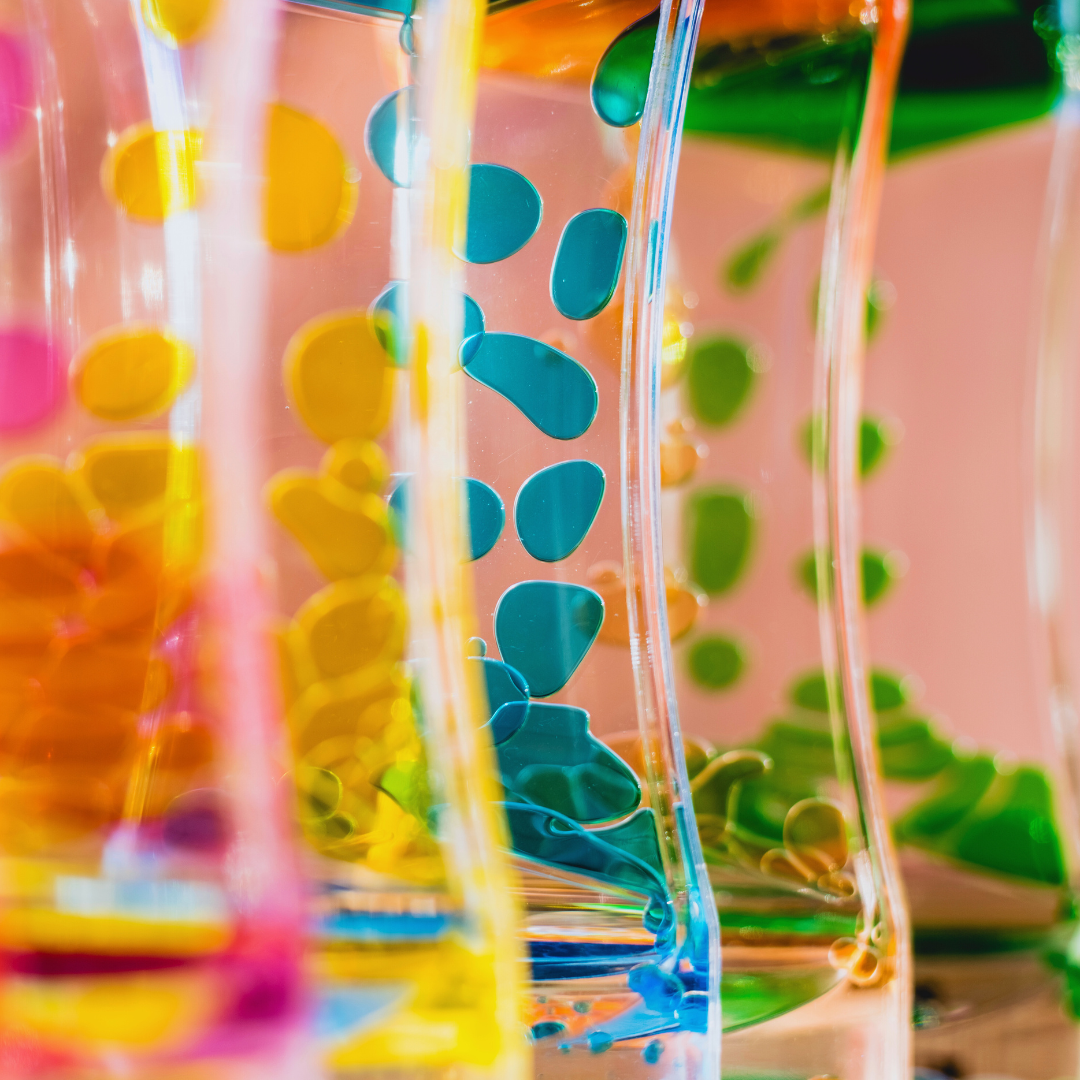
DIY lava lamps illustrate density differences clearly through simple materials. When oil and water are combined, their varied densities cause them to separate, creating distinct layers. This hands-on experiment visually demonstrates the principle that substances with different densities do not mix uniformly.
Adding an effervescent tablet causes bubbles to rise, carrying blobs of coloured liquid with them. This movement is a straightforward example of how changes in density and gas interaction affect fluid behaviour. It enables learners to see density concepts in action without complex equipment.
By making a lava lamp, individuals engage with a practical demonstration of density, buoyancy, and liquid dynamics. This simple project provides a concrete, memorable way to understand these fundamental science principles.
How DIY Lava Lamps Demonstrate Basic Density Principles
DIY lava lamps highlight the concept of liquid density by showing how substances with different densities interact. The layering and movement within the lamp reveal how matter arranges itself based on weight and composition.
The Role of Different Densities in Lava Lamps
The key to a homemade lava lamp is the use of liquids with distinct densities. Typically, vegetable oil and water are chosen because vegetable oil has a lower density than water. This means vegetable oil floats on top of the water. The difference in density prevents the liquids from mixing completely and creates the base for the lamp’s visual effect.
Density is a measure of mass per unit volume. In this case, vegetable oil’s density is around 0.92 grams per cubic centimetre, while water’s density is 1 gram per cubic centimetre. Because substances with lower density rise above those with higher density, the oil layer rests above the water layer.
Why Oil, Water, and Food Colouring Don’t Mix
In the DIY lava lamp, water and vegetable oil remain separate due to their molecular properties and differing densities. Water molecules are polar, meaning they have a slight electrical charge, causing them to attract each other. Oil molecules are nonpolar and repel water molecules, causing both liquids to stay apart.
Food colouring, which is water-based, sinks through the oil because it is denser than oil but denser or similar in density to water. It dissolves in the water layer, colouring only the water. This separation of liquids and colours demonstrates principles of molecular interaction and density.
The Visual Layering Effect Explained
The layering effect in a homemade lava lamp occurs because of the difference in densities and the immiscibility of oil and water. When heat is applied, it changes the density of the liquids slightly, causing coloured blobs in the water to rise and fall.
These coloured blobs move because heated water becomes less dense and rises, while cooler water is denser and sinks. The rising and falling blobs simulate the classic lava lamp movement, visually demonstrating how changes in density affect the behaviour of matter in liquids.
|
Substance |
Approximate Density (g/cm³) |
Behaviour in Lamp |
|
Vegetable Oil |
0.92 |
Floats on water, forms a top layer |
|
Water |
1.00 |
Sinks below oil, accepts colouring |
|
Food Colouring |
Varies, ~1.00+ |
Dissolves in water, not oil |
The Science Behind DIY Lava Lamps: Chemical Reactions and Bubbles
The DIY lava lamp experiment combines chemical reactions and gas production to demonstrate basic density and movement principles. The formation of bubbles, their rise through liquids, and their interaction with different substances explain the visual effects in a simple, observable way.
How Alka-Seltzer Tablets Create Bubbles
Alka-Seltzer tablets contain sodium bicarbonate and citric acid. When dropped into water, these two compounds react chemically. This acid-base reaction produces carbon dioxide gas.
The reaction can be summarised as:
Sodium bicarbonate + Citric acid → Carbon dioxide + Water + Other byproducts.
Carbon dioxide forms as bubbles that rise through the liquid. This gas production is crucial because it drives the movement inside the lava lamp experiment. The tablets do not create bubbles by fizzing alone; it is the chemical reaction that creates gas continuously.
The Production and Movement of Carbon Dioxide Gas
Carbon dioxide gas is produced in the water, where the reaction occurs. Being less dense than water and oil, the gas bubbles rise naturally. As they ascend, they carry some of the coloured oil droplets upwards.
The bubbles’ movement changes the density distribution within the liquids. Once the gas escapes at the top, the oil droplets lose their buoyancy and sink back down. This cycle creates the characteristic rising and falling motion.
Interplay Between Chemical Reactions and Liquid Movement
The chemical reaction generates continuous carbon dioxide bubbles, maintaining the cycle. These bubbles interact with two immiscible liquids—water and oil—which have different densities. The oil, being less dense, floats on the water.
As bubbles rise, they attach to oil blobs and pull them upwards. When the bubbles reach the surface and release the gas, the oil sinks again. This repeated cycle highlights important density principles through an engaging visual of chemical reaction dynamics and buoyancy.
Hands-On Learning: Step-by-Step Lava Lamp Science Activity
This activity demonstrates how different liquids interact through their densities and immiscibility. Following precise materials and methodical steps enables clear observation of physical science concepts. Safety and careful handling improve the overall learning experience.
Materials Needed for the Experiment
To perform this science experiment, gather the following materials:
- A clear plastic or glass bottle (500ml or larger)
- Vegetable oil (acts as a less dense liquid)
- Water (denser liquid)
- Food colouring (provides visual contrast)
- Alka-Seltzer tablets or effervescent antacid (creates bubbles)
- A funnel (for easy pouring)
- Measuring cup or beaker
These items are readily available and inexpensive. Using clear containers allows easy observation of the bubbled movement. Food colouring should be water-soluble for the best effect, as oil does not mix with it.
Methodical Instructions for Making a DIY Lava Lamp
Begin by filling the bottle about three-quarters full with vegetable oil. Add water carefully until the bottle is nearly full, leaving some air space at the top. The water will settle below the oil because it is denser.
Add several drops of food colouring to the bottle. The droplets will pass through the oil and colour the water below. Break one Alka-Seltzer tablet into smaller pieces. Drop one piece into the bottle and watch the bubbles rise and fall, carrying coloured water with them.
Observe the bubbles as they demonstrate the interaction between the liquids and the effect of gas generation. Repeat adding tablet pieces to extend the activity. This hands-on learning shows density differences and reaction principles clearly.
Tips for Safe and Effective Experiments
Ensure the experiment takes place in a well-lit area with a stable surface to avoid spills. Use plastic containers when working with children to prevent breakage. Handle effervescent tablets carefully and keep them away from moisture until use.
Encourage learners to observe without shaking the bottle; agitation mixes the liquids temporarily and may disrupt clarity. Clean spills immediately to prevent slipping or staining. Discuss what they observe to reinforce understanding of density and chemical reaction basics.
Proper disposal of the experiment liquids follows local guidelines; do not pour large quantities down drains. This approach ensures a safe, controlled hands-on science activity for all participants.
Exploring Further: Scientific Principles and Real-World Connections
The homemade lava lamp demonstrates several core scientific ideas, linking weight, volume, and molecular behaviour. These concepts are visible in action, enabling a clearer understanding of matter properties and how they interact.
Connecting Lava Lamps to States of Matter
The lava lamp’s movements illustrate interactions between solid, liquid, and gas states. When the effervescent tablet reacts with water, gas bubbles form, lifting coloured blobs due to changing densities.
Heat from the lamp’s light warms the liquid, reducing density so blobs rise. Cooling causes them to sink. This dynamic allows observation of liquids changing density with temperature and highlights how gases behave inside liquids.
This simple setup demonstrates molecular spacing differences in various states—gases expand, increasing volume, while liquids contract when cooled. The lamp visualises abstract states of matter concepts by making them tangible.
Variation Experiments with Different Liquids and Tablet Sizes
Using different liquids, such as oil or water mixtures, alters density and reaction speed in a lava lamp. Heavier liquids slow blob movement, while lighter ones increase float time.
Changing tablet size affects gas production—larger tablets create more bubbles, increasing lift force and altering motion patterns. Smaller tablets produce gentler activity, showing how chemical reaction rates influence physical effects.
Experimenting with liquid types like salt water or vegetable oil pairs density with viscosity. This shows how viscosity affects blob formation and rise speed, deepening the understanding of fluid dynamics.
|
Variable |
Effect on Lava Lamp |
|
Liquid type |
Alters density & viscosity |
|
Tablet size |
Controls gas bubble amount |
|
Temperature |
Changes the liquid density |
These variations allow hands-on exploration of scientific principles beyond static explanations.


